




Table of Contents
Why Coimbatore Is a Preferred Destination for MBA Aspirants
Coimbatore has steadily established itself as both an education and industry hub in Tamil Nadu, creating a unique ecosystem where academic institutions and business enterprises coexist in productive synergy. The city's reputation as the Manchester of South India isn't limited to its textile heritage—it now encompasses a diverse industrial landscape spanning manufacturing, information technology, automotive components, healthcare, hospitality, and a rapidly growing startup ecosystem.
This industrial diversity directly translates into opportunity for MBA graduates. Companies operating in Coimbatore actively seek industry-ready management professionals who understand both business fundamentals and practical application. The demand spans multiple domains: finance professionals for the city's banking and NBFC sector, marketing specialists for consumer goods and retail businesses, operations managers for manufacturing units, HR professionals for the expanding service sector, and analysts for the growing technology companies establishing presence in the region.
Private MBA colleges have emerged as flexible, career-focused options that respond quickly to industry needs. Unlike government institutions that may face bureaucratic constraints in curriculum updates or infrastructure development, private colleges often demonstrate agility in introducing new specializations, adopting contemporary teaching methodologies, and building industry partnerships. For students and working professionals in Coimbatore and nearby districts like Tiruppur, Erode, Salem, and Nilgiris, these institutions offer accessible pathways to quality management education without the need to relocate to metropolitan cities.
The combination of Coimbatore's lower cost of living compared to Chennai or Bangalore, the city's industrial connectivity, and the availability of quality private MBA colleges creates a compelling value proposition for students seeking practical management education grounded in real business environments.
What Are Private MBA Colleges?
Private MBA colleges are self-financed educational institutions that operate under the regulatory framework of bodies like AICTE (All India Council for Technical Education) while maintaining affiliation with recognized universities. In Tamil Nadu, most private MBA colleges are affiliated with Anna University, ensuring that their curriculum, examination standards, and degree certification meet established academic benchmarks.
Key Characteristics of Private MBA Colleges
Autonomous Governance: While affiliated to universities for degree certification, private colleges often enjoy operational autonomy in day-to-day management, faculty recruitment, infrastructure development, and supplementary program design. This autonomy enables faster decision-making and adaptation to emerging industry requirements.
Self-Financed Model: These institutions generate revenue primarily through student fees rather than government funding. This financial model necessitates maintaining quality and relevance to attract students, creating a market-driven accountability mechanism.
University Affiliation: Despite being privately managed, these colleges maintain affiliation with established universities like Anna University, ensuring that degrees awarded carry official recognition and meet national education standards.
How Private Colleges Differ from Government Institutions
Curriculum Flexibility: While the core syllabus follows university guidelines, private colleges often supplement this with additional certifications, workshops, and skill development programs that address current industry needs. They can introduce elective courses, industry-relevant training modules, and contemporary business tools more rapidly than government institutions navigating bureaucratic approval processes.
Industry Exposure: Private MBA colleges frequently demonstrate stronger industry connections, facilitating guest lectures, corporate visits, internship placements, and live project opportunities. The need to demonstrate placement outcomes creates institutional motivation to build and maintain these corporate relationships.
Admission Flexibility: Private colleges typically offer multiple admission windows, counseling support, and varied entrance exam acceptance, making the admission process more accessible for students from diverse academic backgrounds or those who may have missed traditional government college admission timelines.
Infrastructure Investment: The need to compete for quality students often drives private colleges to invest in modern classrooms, digital learning infrastructure, libraries with contemporary resources, and campus facilities that create conducive learning environments.
Why Students Prefer Private MBA Colleges Today
The preference for private MBA colleges among many students stems from practical considerations. The smaller batch sizes common in private institutions often enable more personalized attention from faculty. The emphasis on placement outcomes means structured training in aptitude, communication, and interview skills. The willingness to accommodate working professionals through flexible schedules addresses the growing segment of students pursuing management education while employed.
Additionally, for students from Coimbatore and surrounding areas, the availability of quality private MBA colleges locally eliminates the financial burden and lifestyle disruption of relocating to distant cities, while still providing access to industry-connected management education.
Why Choose a Private MBA College in Coimbatore?
Industry-Aligned Curriculum
Private MBA colleges in Coimbatore recognize that proximity to the city's diverse business ecosystem creates unique learning opportunities. The curriculum, while following Anna University's academic framework, is often enriched with components that reflect local industry realities. Case studies from Coimbatore-based companies—whether textile manufacturers, engineering firms, or technology startups—provide contextual learning that feels immediately relevant to students.
Guest faculty from local industries bring practical perspectives into classrooms, sharing insights on supply chain challenges in manufacturing, customer acquisition strategies in competitive markets, financial management in family-owned businesses, and talent retention in growing companies. This industry alignment ensures that theoretical concepts are consistently grounded in real business applications that students can observe in their immediate environment.
The curriculum flexibility extends to emerging areas like digital marketing, business analytics, and entrepreneurship—domains where industry practices evolve rapidly and academic institutions must adapt quickly to remain relevant.
Strong Placement and Skill Development Focus
Private MBA colleges operate in a competitive environment where placement outcomes significantly influence institutional reputation and future student enrollment. This market reality creates strong institutional motivation to invest in placement preparation and skill development.
Structured placement training typically begins early in the MBA program rather than in the final semester. Students receive systematic training in quantitative aptitude, logical reasoning, verbal ability, group discussion techniques, and interview skills. Mock recruitment drives simulate actual corporate selection processes, helping students understand expectations and refine their approach.
Beyond placement-specific training, skill development encompasses soft skills that employers consistently identify as critical: business communication, presentation abilities, teamwork, leadership under constraints, and professional etiquette. For many students from Tamil Nadu's smaller towns or non-metropolitan backgrounds, these skill development programs bridge the gap between academic knowledge and workplace readiness.
The focus on employability also drives colleges to facilitate internships, ensuring students gain hands-on exposure to organizational functioning during their MBA journey.
Modern Infrastructure and Learning Environment
The competitive landscape among private MBA colleges has driven infrastructure development that benefits students. Modern classrooms equipped with audio-visual systems support multimedia learning. Computer labs with relevant software provide hands-on practice with business tools, from spreadsheet modeling to statistical analysis packages. Libraries stocked with current business publications, case study resources, and digital database access support research and self-directed learning.
Seminar halls facilitate guest lectures, workshops, and group presentations. Collaborative spaces enable project work and peer learning. Internet connectivity supports access to online learning resources, industry research, and communication with the broader academic and business community.
For students who will spend two years in intensive study, the quality of physical infrastructure and learning environment directly impacts their educational experience and productivity.
Easier Accessibility for Local and Nearby Students
Geography matters in education decisions. For students from Coimbatore, Tiruppur, Erode, Pollachi, Mettupalayam, and other nearby areas, pursuing an MBA at a local private college offers significant advantages. The elimination of relocation costs—rent, separate food expenses, travel between home and distant city—makes management education more financially accessible.
Students can maintain family connections and support systems while pursuing their degree. For working professionals, local colleges enable the possibility of continuing employment while pursuing education through evening or weekend programs where available.
The familiarity with the local business environment also means students can more easily access internship opportunities, part-time work if needed, and industry connections that may benefit their career trajectory. Parents, particularly those from traditional backgrounds, often feel more comfortable with their children pursuing higher education in a familiar city rather than relocating to unfamiliar metropolitan environments.
Key Factors to Evaluate Before Choosing an MBA College
Making an informed decision about MBA college selection requires systematic evaluation across multiple dimensions. Understanding these factors helps students move beyond surface-level considerations like brand perception or fee comparisons to assess genuine educational value.
Accreditation and Approvals
The foundation of any legitimate MBA program is regulatory approval. AICTE approval ensures that the institution meets prescribed infrastructure standards, maintains qualified faculty, follows prescribed curriculum frameworks, and operates under regulatory oversight. University affiliation—typically with Anna University for colleges in Tamil Nadu—ensures degree certification that carries official recognition.
Students must verify current approval status rather than relying on past credentials or verbal assurances. These verifications protect against investing time and resources in degrees that may face recognition challenges during employment or further education pursuits.
Faculty Expertise
The quality of faculty directly determines the quality of education delivered. Evaluate faculty credentials not just by academic degrees but by the combination of educational qualifications and practical industry experience. Faculty members who have worked in corporate environments or maintained consulting relationships bring real-world context to theoretical concepts.
Teaching methodology matters as much as subject knowledge. Faculty who employ case-based learning, facilitate discussions rather than delivering monologues, incorporate current business events into classroom discussions, and demonstrate genuine interest in student learning create more engaging and effective educational experiences.
Infrastructure and Campus Facilities
While infrastructure shouldn't be the sole decision criterion, adequate facilities are necessary for effective learning. Beyond the visible elements like building aesthetics, evaluate functional infrastructure: classroom capacity relative to batch size, availability of computers with necessary software, library resources including digital databases, internet bandwidth and reliability, and spaces for group work and collaborative projects.
Visit the campus physically if possible. Observe the learning environment during regular class hours—are facilities actually utilized or merely showcased? Speak with current students about their experience with infrastructure adequacy.
Placement Support and Industry Tie-Ups
Examine the structure and consistency of placement support. Is there a dedicated placement cell with full-time staff? Does placement training begin early in the program? What is the range of companies that recruit from the institution—are they concentrated in specific sectors or diverse across industries?
Industry tie-ups manifest in multiple forms: guest lectures, industrial visits, internship facilitation, collaborative research projects, and recruitment relationships. The quality of these connections matters more than the quantity of names listed on websites or brochures.
Request specific information about placement outcomes for your intended specialization. Aggregate placement statistics may mask significant variation between specializations—finance roles may command different packages and have different employer profiles compared to HR or operations roles.
Admission Process and Entrance Exam Acceptance
Understanding the admission process helps you plan timelines and prepare required documentation. Which entrance exams does the college accept—TANCET, CAT, MAT, CMAT? Are there minimum score requirements, or does the college consider scores alongside academic background and interview performance?
A transparent admission process with clear eligibility criteria, documented fee structures, and accessible counseling support indicates institutional professionalism. Conversely, vague admission criteria, pressure tactics during counseling, or lack of documentation should raise caution flags.
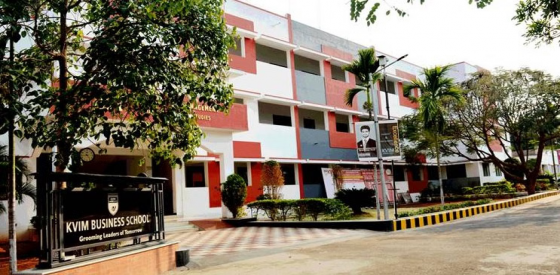
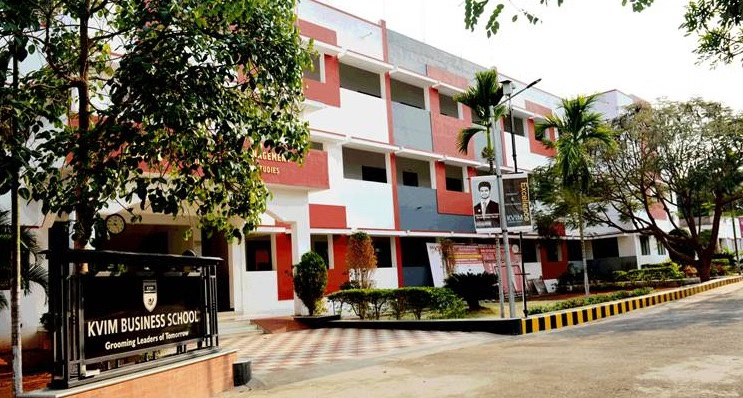
A Leading Private MBA College in Coimbatore: KV Institute of Management and Information Studies
About the Institution
KV Institute of Management and Information Studies represents a student-centric approach to management education in Coimbatore, combining regulatory compliance with practical career focus. The institution operates under AICTE approval and maintains affiliation with Anna University, ensuring that degrees awarded meet national standards while the educational delivery remains responsive to industry requirements.
The institutional vision extends beyond degree certification to encompass holistic professional development. This means addressing not just curriculum completion but also skill gaps, confidence building, industry exposure, and career readiness—elements that collectively determine whether an MBA translates into meaningful career advancement.
The college's location in Coimbatore provides strategic advantages: access to diverse industries for learning opportunities, connections with local business leaders for mentorship and guidance, and a cost structure that makes quality education accessible to students from various economic backgrounds across Tamil Nadu.
MBA Program Highlights
Industry-Relevant Specializations
KV Institute offers a comprehensive range of MBA specializations designed to match the diverse career aspirations of students and the varied demands of Tamil Nadu's business landscape:
MBA in Finance prepares students for roles in banking, corporate finance, investment analysis, and financial consulting through curriculum covering financial management, investment strategies, risk assessment, and financial markets.
MBA in Marketing addresses the full spectrum of marketing challenges from traditional brand management to contemporary digital marketing, equipping students for careers in sales, brand management, market research, and marketing strategy across consumer goods, retail, and service sectors.
MBA in Human Resource Management develops professionals capable of managing talent acquisition, employee engagement, performance systems, and organizational development—critical capabilities as Coimbatore's businesses scale and professionalize their HR functions.
MBA in Operations Management leverages Coimbatore's strong manufacturing base to provide students with relevant exposure to supply chain optimization, production planning, quality management, and process improvement methodologies.
MBA in IT Systems bridges technology and management, preparing graduates for roles at the intersection of business strategy and technological implementation—increasingly relevant as digital transformation affects every industry.
Specialized programs including Logistics and Supply Chain Management, Infrastructure and Real Estate Management, Tourism Management, and Entrepreneurship Development address specific industry sectors and career paths, providing focused preparation for students with clear professional objectives.
Practical Learning Methodology
The pedagogical approach extends beyond lectures and examinations to incorporate methods that mirror professional environments. Case study analysis develops problem-solving abilities using real business scenarios. Group projects build teamwork and collaborative skills. Presentations strengthen communication confidence. Industry visits provide firsthand observation of business operations. Guest lectures from practitioners offer insights that purely academic faculty cannot provide.
This practical orientation ensures that graduates don't face a jarring disconnect between classroom learning and workplace realities—they've already engaged with business challenges in formats that approximate professional settings.
Soft Skills and Employability Training
Recognizing that technical knowledge alone doesn't ensure career success, KV Institute incorporates systematic soft skills development throughout the MBA program. Communication workshops address both written and verbal business communication, helping students articulate ideas clearly and professionally. Leadership development activities build confidence in taking initiative and managing teams. Aptitude training prepares students for the competitive tests that many companies use in recruitment processes.
This employability focus reflects understanding that MBA graduates compete in a national job market where communication confidence, professional presentation, and problem-solving agility often differentiate successful candidates from those who struggle despite academic credentials.
Infrastructure and Campus Facilities
Classrooms and Learning Spaces
The college maintains classrooms designed for interactive learning rather than passive lecture reception. Audio-visual equipment supports multimedia presentations and video-based case studies. Seating arrangements facilitate discussion and group work alongside traditional instruction formats. Air-conditioned environments maintain comfort during extended class sessions.
Digital Learning Tools
Computer laboratories provide access to business software including spreadsheet applications for financial modeling, statistical packages for data analysis, and presentation tools for professional communication. Internet connectivity enables access to online learning resources, business databases, and digital libraries that supplement physical resources.
Library Resources
The library collection includes textbooks, reference books, business periodicals, case study repositories, and competitive exam preparation materials. Digital database access provides students with research papers, industry reports, and current business publications that support project work and keep students connected to evolving business practices.
Seminar Halls and Collaborative Spaces
Dedicated seminar halls host guest lectures, workshops, placement drives, and student presentations. These spaces create professional environments where students practice formal communication and engage with external stakeholders. Collaborative spaces enable informal study groups, project discussions, and peer learning that complements formal instruction.
Student Amenities
Beyond purely academic infrastructure, the campus provides amenities that support student wellbeing and community building: areas for breaks and informal interaction, facilities that make spending extended hours on campus comfortable, and environments that foster the relationships and networks that often prove valuable throughout professional careers.
Placement and Career Support
Career Guidance
KV Institute's approach to career development begins with understanding individual student strengths, interests, and aspirations rather than applying a one-size-fits-all placement strategy. Faculty mentors and career counselors help students navigate specialization choices, identify career paths that align with their capabilities, and develop realistic career plans.
This guidance includes helping students understand different industry sectors, the roles available within them, typical career progressions, and the specific skills each path demands. For students uncertain about their career direction, this structured guidance proves invaluable in making informed choices.
Internship Exposure
Structured internship programs, typically conducted during the summer break between academic years, provide critical hands-on experience. KV Institute facilitates internship placements with companies across Coimbatore's diverse industries—manufacturing firms, service companies, financial institutions, retail businesses, and technology startups.
These internships serve multiple purposes: applying classroom concepts in real organizational contexts, understanding workplace dynamics and professional expectations, building confidence in professional environments, and sometimes opening doors to eventual placement opportunities with internship companies.
Skill Development Initiatives
Beyond the core curriculum, the college organizes workshops, certification programs, and training sessions that add tangible credentials to student profiles. Digital marketing certifications, financial modeling workshops, HR analytics training, and similar initiatives provide students with demonstrable skills that enhance employability.
Regular aptitude tests, mock group discussions, and interview simulations prepare students for the competitive recruitment processes they'll face. This consistent practice builds both competence and confidence, reducing the anxiety many students experience during actual placement activities.
Admission Process for Private MBA Colleges in Coimbatore
Eligibility Criteria
For MBA admission at private colleges in Coimbatore, candidates generally must possess a bachelor's degree in any discipline from a recognized university. Most colleges require minimum aggregate marks—typically around 50% for general category candidates with relaxation for reserved categories as per government guidelines.
The specific eligibility requirements may vary slightly between institutions, so verifying the exact criteria with your chosen college is advisable. Some colleges may have additional requirements for specific specializations or for candidates with gaps in education.
Entrance Exams Commonly Accepted
Private MBA colleges in Coimbatore typically accept scores from multiple entrance examinations, providing flexibility for students:
TANCET (Tamil Nadu Common Entrance Test): The primary entrance exam for management programs in Tamil Nadu, conducted by Anna University. Most colleges in the state prioritize TANCET scores in their admission process.
National Level Exams: Some institutions also accept scores from CAT (Common Admission Test), MAT (Management Aptitude Test), CMAT (Common Management Admission Test), or other nationally recognized management entrance tests. This acceptance broadens opportunities for students who have appeared for these examinations.
The acceptance of entrance exam scores doesn't necessarily imply minimum cutoff requirements at all institutions. Many private colleges evaluate candidates holistically, considering entrance exam performance alongside academic background, work experience if any, and interview assessments.
Application and Counseling Overview
The typical MBA admission process follows this general sequence:
Application Submission: Obtain and complete the application form, either online through the college website or in physical form from the admissions office. Submit required documents including entrance exam scorecards, academic transcripts, identity proof, and photographs along with the application fee.
Initial Screening: Colleges review applications to verify eligibility and completeness of documentation. This screening may involve preliminary shortlisting based on entrance exam scores and academic performance.
Counseling Session: Shortlisted candidates are invited for counseling, which typically includes a personal interview and document verification. This interaction allows the institution to assess candidate communication skills, career clarity, and genuine interest while providing candidates opportunity to understand the program details, clarify doubts, and evaluate whether the college meets their expectations.
Seat Allocation and Admission: Based on the comprehensive evaluation, colleges offer admission to selected candidates. Students then complete final admission formalities including fee payment and document submission to confirm their enrollment.
Why Early Application Matters
Beginning the admission process early provides several advantages. Early applicants often have more flexibility in specialization choice, as popular specializations may fill quickly. Early engagement with the admissions process allows time for thorough college research, campus visits, and interaction with current students or alumni—activities that support informed decision-making rather than rushed choices under deadline pressure.
For students requiring education loans, early application provides adequate time for loan processing and approval. For those seeking scholarships, early application ensures consideration for merit-based awards that may have limited availability.
Career Opportunities After Completing an MBA
Management Roles Across Industries
An MBA qualification opens pathways to management roles across virtually every industry sector. In Coimbatore's context, this translates to opportunities in textile manufacturing companies as production managers or operations executives, in engineering firms as project managers or business development managers, in financial institutions as relationship managers or credit analysts, in retail businesses as store managers or category managers, and in IT companies as product managers or technical account managers.
The specialization you choose influences the specific roles available: MBA in Finance graduates typically pursue careers in banking, corporate finance departments, or financial advisory; MBA in Marketing professionals work in brand management, sales, digital marketing, or market research; MBA in Human Resources leads to talent acquisition, training and development, or HR business partner roles; MBA in Operations Management opens doors to supply chain, production planning, or quality management positions.
Beyond traditional corporate roles, MBA graduates find opportunities in consulting firms, social enterprises, government initiatives requiring management expertise, and various hybrid roles that combine business acumen with domain specialization.
Entrepreneurship and Higher Studies
For students with entrepreneurial aspirations, an MBA provides foundational business knowledge across functional areas—essential when building a business requires wearing multiple hats. Understanding finance helps with capital management and funding negotiations; marketing knowledge supports customer acquisition; operations expertise enables efficient business processes; HR understanding helps build and manage teams. The MBA in Entrepreneurship Development specifically addresses the unique challenges of starting and scaling businesses.
Coimbatore's entrepreneurial ecosystem, with its history of family businesses and growing startup culture, provides a supportive environment for MBA graduates pursuing business creation rather than employment.
For those inclined toward research or academic careers, an MBA serves as a stepping stone to doctoral programs in management. The research methodology, analytical skills, and business domain knowledge developed during MBA studies provide a foundation for pursuing Ph.D. programs in business administration, management, or specialized areas like marketing strategy, organizational behavior, or financial economics.
Value of Studying in a Locally Connected Institute
Pursuing your MBA at an institution connected to Coimbatore's business community provides networking advantages that extend throughout your career. The relationships formed with local business leaders through guest lectures, internships, and campus recruitment create a professional network rooted in your geographic area of operation.
For students planning to work in Coimbatore or Tamil Nadu more broadly, this local connectivity proves valuable when seeking opportunities, building client relationships, or eventually pursuing entrepreneurial ventures. The alumni network, faculty connections, and industry relationships developed during your MBA become resources you can access throughout your professional journey.
Frequently Asked Questions
- MBA Colleges Near Me in Coimbatore with Good Infrastructure
When searching for MBA colleges near you in Coimbatore with quality infrastructure, focus on visiting campuses physically to assess facilities firsthand rather than relying solely on website photographs or promotional materials. Quality infrastructure manifests in multiple dimensions beyond aesthetic appeal.
Evaluate functional aspects: Are classrooms equipped with proper audio-visual systems that actually work during sessions? Does the library contain current business publications and relevant books, or is it populated with outdated materials? Are computer labs equipped with necessary software and sufficient terminals for student batch sizes? Is internet connectivity reliable and adequate for research and learning activities?
Beyond purely academic infrastructure, assess the overall learning environment. Are spaces conducive to focused study and collaborative work? Are facilities maintained and clean? Do students have adequate spaces for breaks and informal interaction that contribute to community building?
KV Institute of Management and Information Studies maintains infrastructure designed specifically to support practical management education. The campus includes modern classrooms with presentation technology, computer laboratories with business software, library resources covering management disciplines, and seminar facilities for industry interactions. The focus remains on creating functional learning environments that serve educational purposes effectively rather than impressive showcase spaces.
When evaluating any college, ask current students about their experience with infrastructure—they provide the most reliable assessment of whether facilities genuinely support effective learning or merely look good in brochures.
- Contact Details for Top MBA Colleges in Coimbatore
For accurate and current contact information for MBA colleges in Coimbatore, the most reliable approach is visiting official college websites or contacting institutions directly. Contact details including phone numbers, email addresses, and office hours are typically displayed on college websites' contact pages.
For KV Institute of Management and Information Studies, prospective students can reach the admissions office through the contact information provided on the official website. The admissions team responds to inquiries about program details, fee structures, admission timelines, scholarship availability, and campus visit arrangements.
When reaching out to any MBA college, prepare specific questions based on your priorities: Which specializations are offered? What is the faculty profile for your area of interest? What does the placement preparation process involve? What are the typical career outcomes for recent graduates? These specific inquiries yield more useful information than generic requests for "details about your MBA program."
Official inquiry through proper channels also ensures you receive accurate, current information rather than outdated or unofficial information that may circulate through informal networks or third-party websites that aren't regularly updated.
- List of MBA Colleges in Coimbatore Approved by National Accreditation Bodies
When researching MBA college approval status, understand what specific approvals matter and how to verify them. AICTE (All India Council for Technical Education) approval is the primary credential that validates an institution's compliance with infrastructure, faculty, and curriculum standards for technical and management education in India.
University affiliation—typically with Anna University for institutions in Tamil Nadu—ensures that the degrees awarded are certified by a recognized university and meet prescribed academic standards. This affiliation is distinct from approval and serves a different validation function.
To verify approval status, students should:
Visit Official AICTE Website: The AICTE maintains an online portal where students can search for approved institutions by state, city, and program. This official verification protects against false claims or expired approvals.
Check University Affiliation: Visit the affiliated university's website (Anna University for most Tamil Nadu colleges) to verify current affiliation status of institutions you're considering.
Request Documentation: During campus visits or counseling, ask to see current AICTE approval documents and university affiliation certificates. Legitimate institutions readily provide this documentation.
KV Institute of Management and Information Studies maintains current AICTE approval and Anna University affiliation, ensuring that degrees awarded carry proper recognition and meet national standards. This compliance protects students' investments by ensuring degree validity for employment and further education purposes.
However, approval status should be just one factor in your decision rather than the sole criterion. An approved college with poor faculty, inadequate placement support, or ineffective teaching doesn't serve students well despite holding proper credentials. Conversely, approval remains non-negotiable—never consider colleges lacking proper AICTE approval and university affiliation regardless of other attractive features they may claim.
- Cutoff Marks for MBA Entrance Exams for Coimbatore Colleges
MBA entrance exam cutoffs vary significantly across institutions and change annually based on factors including application volume, seat availability, exam difficulty level, and institutional admission policies. Specific cutoff scores are therefore difficult to provide with accuracy and may mislead students if presented as fixed benchmarks.
For TANCET, the primary entrance exam for Tamil Nadu MBA colleges, cutoff marks vary by institution, specialization, and candidate category (general, OBC, SC/ST). Competitive institutions may have higher cutoffs reflecting greater demand, while other colleges may be more accessible with moderate score requirements.
Many private MBA colleges, including KV Institute of Management and Information Studies, take a holistic admission approach rather than relying solely on entrance exam cutoffs. This means they consider entrance exam performance alongside factors like academic background, work experience, and interview assessment when making admission decisions.
This holistic approach benefits students who may have moderate entrance exam scores but demonstrate strong potential through other dimensions—consistent academic performance, relevant work experience, clear career goals, or strong communication abilities evident during counseling interactions.
Rather than focusing excessively on cutoff marks, students should:
Perform Your Best: Prepare seriously for entrance exams and aim for the highest score you can achieve, as strong scores expand your options.
Don't Self-Eliminate: If your scores are moderate, don't assume you're ineligible. Many colleges, particularly those with student-friendly counseling processes, will evaluate your complete profile rather than rejecting based solely on entrance scores.
Focus on Multiple Factors: When comparing colleges, assess the complete educational value—faculty quality, learning methodology, placement support, infrastructure—rather than selecting purely based on which college has the highest entrance cutoffs.
KV Institute's counseling-guided admission approach ensures that students with serious commitment to management education and clear career objectives receive fair evaluation beyond just entrance exam performance.
- Top MBA Colleges in Coimbatore Offering Part-Time Courses
Part-time MBA programs serve working professionals who wish to pursue management education while continuing their employment. These programs typically feature evening classes, weekend sessions, or modular learning formats that accommodate professional schedules.
The suitability of part-time MBA programs depends on individual circumstances: career stage, employer support for continued education, financial considerations, and learning preferences. Professionals with several years of work experience often find part-time programs particularly valuable, as they can immediately apply classroom learning to workplace challenges and bring practical insights into academic discussions.
The availability of part-time MBA programs varies across institutions and depends on AICTE approval for such programs and institutional capacity to deliver quality education in flexible formats. Not all colleges offer part-time options, and those that do may offer limited specializations compared to full-time programs.
When evaluating part-time MBA options, consider:
Accreditation: Ensure the part-time program carries the same AICTE approval and university affiliation as full-time programs, protecting degree validity.
Schedule Feasibility: Verify that class schedules genuinely accommodate working professionals rather than creating impossible conflicts between work and academic commitments.
Learning Quality: Assess whether part-time programs receive equal faculty attention, infrastructure access, and placement support as full-time programs, or whether they function as secondary priorities.
Peer Group: Understand the typical student profile in part-time programs—learning benefits when classmates bring diverse work experiences that enrich discussions.
KV Institute of Management and Information Studies focuses on supporting career-oriented learners through various mechanisms. For specific information about part-time program availability, schedules, and admission requirements, prospective students should contact the admissions office directly to discuss options that align with their professional circumstances and educational goals.
Choosing the Right MBA College in Coimbatore
Selecting the right MBA college requires moving beyond superficial factors like campus aesthetics or brand perception to evaluate substantive elements that determine educational quality and career outcomes. Your decision checklist should systematically address:
Regulatory Compliance:Verify AICTE approval and university affiliation through official sources, protecting your degree's validity and recognition.
Academic Quality: Assess faculty credentials, teaching methodology, curriculum relevance to your specialization interests, and the institution's approach to practical learning alongside theoretical instruction.
Career Support:Evaluate the structure and consistency of placement preparation, industry connections, internship facilitation, and the career guidance available to students navigating their professional paths.
Infrastructure Adequacy:Visit campuses to assess whether facilities genuinely support effective learning or merely create impressive appearances.
Value Proposition: Consider the total investment including fees, living costs, and opportunity costs against the realistic career outcomes and long-term earning potential the MBA enables.
Personal Fit: Reflect on whether the college's location, learning environment, batch size, and institutional culture align with your learning preferences and personal circumstances.
Make this decision through direct engagement: visit campuses, speak with current students who will provide unfiltered perspectives, interact with faculty to understand teaching approaches, and ask admissions counselors specific questions about areas that matter most to you. For students considering quality private MBA education in Coimbatore, KV Institute of Management and Information Studies offers a comprehensive option combining regulatory compliance, industry-relevant specializations, practical learning methodology, and career-focused support. The institution's commitment to student success manifests in transparent operations, accessible faculty, consistent skill development, and genuine preparation for professional challenges. Your MBA journey represents a significant investment of time, resources, and career momentum. Choose an institution that views this investment as a partnership commitment rather than a transactional service. Seek colleges that demonstrate genuine interest in your career success, provide honest communication about opportunities and challenges, and build their reputation on graduate outcomes rather than marketing promises. Begin your research early, engage with multiple institutions to develop informed comparison, trust your assessment of which environment will serve your learning and career needs most effectively, and make your decision with confidence rooted in thorough evaluation rather than external pressure or incomplete information. Your management education foundation deserves careful selection—invest the time to choose wisely.